 Meeting Diverse Needs for Small Batches, Multiple Varieties & Short Lead Times

 English
 Español
 عربى

Pure Aluminum Enameled Wire: What Changes at the Winding Bench
Pure Aluminum Enameled Wire arrives at the winding bench with a set of adjustments that a copper-based shop may not have needed. The wire behaves differently under tension, the conductor size changes for the same electrical result, and the ends of a coil are joined by different methods. Winders who plan for these points early tend to move between materials without trouble, and the questions below come up in nearly all changeovers.
How Much Larger Does the Conductor Get?
Aluminium carries current less readily than copper, so a coil designed for copper cannot simply swap in the same diameter. For the same DC resistance, the aluminium cross-section is roughly 1.6 times larger. A copper wire of 0.50 mm, for example, corresponds to about 0.64 mm in aluminium. Mass moves the other way: because aluminium is much lighter by volume, the conductor weighs roughly half as much as the copper version with the same resistance.
That calculation is the first step in any conversion, and a project with Pure Aluminum Enameled Wire starts from that arithmetic. Designers recalculate the wire diameter, then check whether the larger section still fits the winding window with its insulation and slot liner. Aluminum Coils for motors and transformers with generous winding space accept the change easily, while compact designs may need a closer look at turns and layers.
What Happens to Winding Tension?
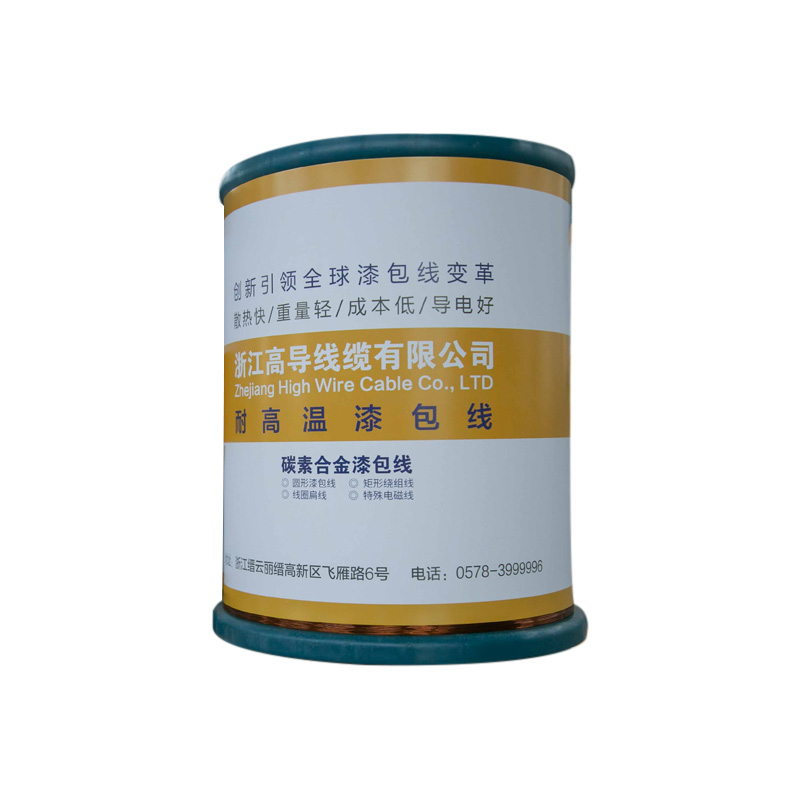
Pure aluminium is softer than copper and stretches more readily under load. Winders usually lower the tension setting, smooth the guide path and watch the first coil closely, since a tension that suits copper can thin the conductor before it reaches the bobbin. Pure Aluminum Wire with a well-applied enamel film tolerates normal handling, and Pure Aluminum Enameled Wire holds up well on automatic machines once the settings are adjusted, but corners and tight bends deserve extra attention because the film and the conductor are both under stress there.
Spool format matters as well. A smooth, even layer on the supply spool lets the wire pay out without snagging, and that is easier to arrange when the spool is wound with the same care as the coil that follows.
How Do the Terminations Change?
Aluminium forms a thin oxide layer almost as soon as the enamel is removed from an end. Ordinary solder does not take to that surface the way it does to copper, so winding shops that work with Aluminum Enameled Wire choose termination methods built for it, such as ultrasonic joining or crimped connections with terminals made for aluminium. Stripping the enamel cleanly and joining the end soon afterwards limits the oxide that has to be broken through.
Some shops keep aluminium and copper terminations on separate stations, with jobs using Pure Aluminum Enameled Wire assigned to their own station so that tools and habits do not cross over. Others run a short trial lot on each new wire to confirm the joint method before full production begins.
Drawing and Enameling on One Line
Zhejiang Changran Technology Co., Ltd. runs wire drawing and enameling for Enameled Winding Wire as a single integrated line, so the conductor passes from the die to the enamel applicator without being spooled in between. Drawing speed, enameling temperature and film thickness are monitored and adjusted for each specification, which is how one line can supply both the 180 °C grade and the 200 °C grade of Pure Aluminum Enameled Wire, listed as QZL-180 and QZL-200.
A bare aluminium surface begins to oxidise soon after it is drawn, so a short gap between die and enamel protects the surface that the film bonds to. The same arrangement handles custom diameters, which suits the small-quantity orders that winding shops place when they trial a new wire. A coil wound from Pure Aluminum Enameled Wire made this way starts with a conductor that has not waited between operations.

- (+86) 578-3999996
- (+86) 15088455116
- 820381596@qq.com
- Yanghao Block, Suichang Economic Development Zone, Yunfeng Subdistrict, Suichang County, Lishui City, Zhejiang Province, China
Copyright © Zhejiang Changran Technology Co., Ltd. All rights reserved.
