 Meeting Diverse Needs for Small Batches, Multiple Varieties & Short Lead Times

 English
 Español
 عربى

Magnet Wire Factory Planning for Small Batches and Many Specifications
A Magnet Wire Factory was once judged by how many tonnes it could push through a few standard sizes. Many orders now ask for something different: several conductor sizes, more than one insulation class, and a short run of each. A household appliance maker, a workshop rewinding industrial motors and a producer of high-frequency transformers each want their own gauge on their own spool, and one set of lines has to answer all of them.
Why Short Runs Are Routine
Different end uses draw on different conductors. Pure copper serves designs where conductivity comes first, pure aluminium suits designs where weight matters, and carbon alloy aluminium and copper-clad graphene wire are made for designs that call for a lighter conductor with added strength. Each of these appears on motor makers' order sheets in several diameters at once, and rarely in the same volume. That mix of materials and sizes shapes each scheduling decision inside a Magnet Wire Factory.
Distributors who supply small motor shops feel the effect directly, because their customers rarely order one size in bulk. An Enameled Wire Manufacturer that supports this pattern keeps conductor stock for several materials on hand and plans the lines in blocks, so that a cluster of related sizes runs together before the line is changed over.
What Changes Between Two Runs
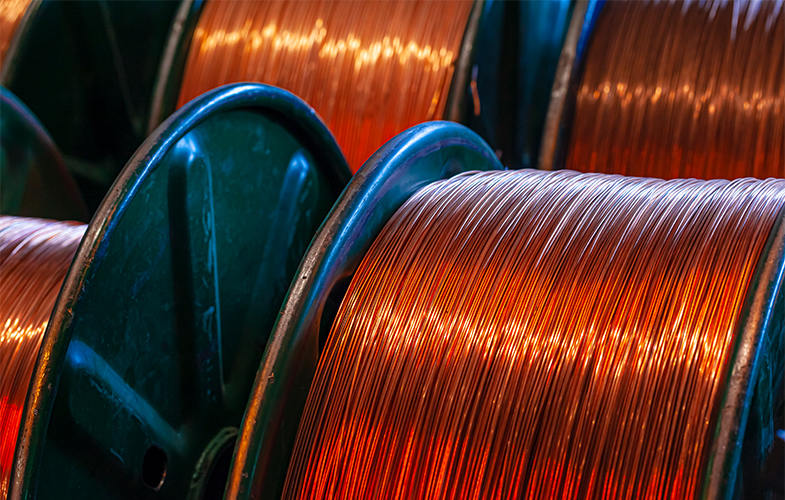
Moving from one specification to the next touches more than the spool. The conductor diameter sets the die size. The number of enamel coats sets how many passes the wire makes through the applicator and the curing oven. The temperature class decides which enamel is used, and the oven profile has to match it. The range from Zhejiang Changran Technology Co., Ltd., based in Suichang, Zhejiang, lists classes of 180, 200 and 220 °C across pure copper, pure aluminium and carbon alloy aluminium wire, so the same line may switch enamel several times in a week.
Spool format adds one more variable. Winders on automatic machines ask for specific spool types and lengths, and packing each lot to those requirements takes time that has to be built into the schedule.
Planners in a Magnet Wire Factory therefore try to keep changeovers few. Grouping runs by enamel and by diameter band shortens the time a line spends between orders, and that grouping is what makes short lead times possible when many specifications are in play.
Round, Flat and Rectangular on One Schedule
Round wire passes through round dies and winds easily onto standard spools. Rectangular Winding Wire and flat wire ask for different dies and gentler handling, since the corners need an even enamel layer and the edges are easier to damage. Industrial motors and power equipment, and automotive motors, often call for these shapes because they allow tighter filling of a winding slot.
A plant that handles round, flat and rectangular conductors on one schedule has to decide where each shape fits. Specialty Enameled Wire orders, such as composite conductors, tend to take longer to set up, so planners place them in their own blocks rather than between runs of round wire. A Magnet Wire Factory that keeps these blocks separate avoids stretching the changeover for the orders around them.
Checks Between the Oven and the Spool
At a Magnet Wire Factory, Enameled Magnet Wire is checked as it comes off the line. Typical checks include conductor diameter, enamel thickness, continuity of the film, adhesion and flexibility, and breakdown voltage on a sample length. Short runs mean the first piece of each run matters, since there is little production behind it to average out a setting error.
The factory also supports product selection with consultation and customer training, and it offers a 24-hour response to after-sales questions. A short sample length is often a direct way for a winder to see how a wire behaves on their own machine, and a Magnet Wire Factory that can supply one without waiting for a full run saves that winder a week.

- (+86) 578-3999996
- (+86) 15088455116
- 820381596@qq.com
- Yanghao Block, Suichang Economic Development Zone, Yunfeng Subdistrict, Suichang County, Lishui City, Zhejiang Province, China
Copyright © Zhejiang Changran Technology Co., Ltd. All rights reserved.
